
How to Choose the Right Cricket Bat: A Complete Buying Guide
Buying a cricket bat online can feel like a gamble — pick-up, balance, and sweet spot are hard to judge from a photo. This guide walks through the factors that actually matter, so you can choose with confidence instead of guessing.
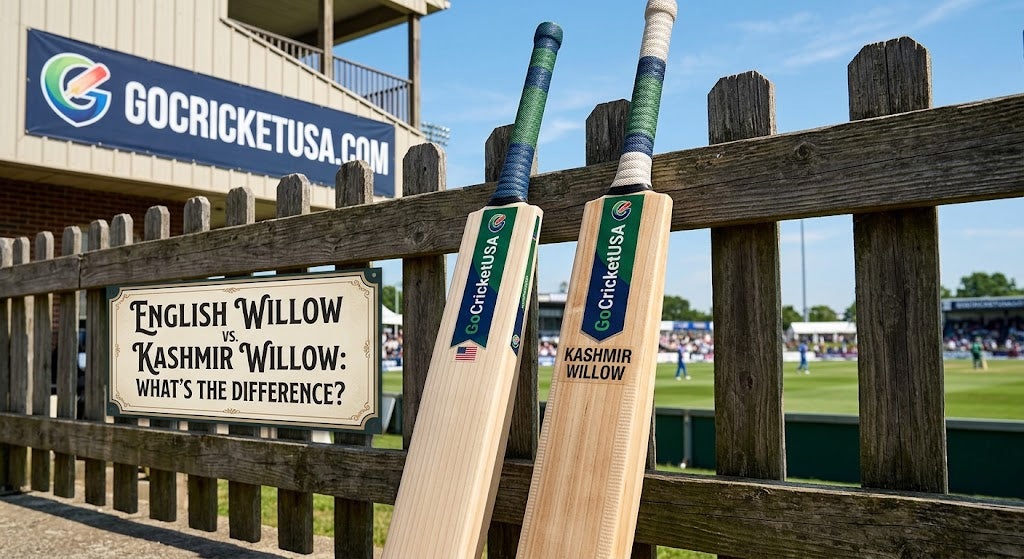
1. Willow Type: English vs. Kashmir
The wood a bat is made from is the single biggest factor in how it performs and how much it costs.
- English willow is grown in cooler climates, giving it a finer grain, better shock absorption, and a noticeably lighter pick-up for its size. It's the standard choice for club and representative-level players, and it's graded from Grade 1 (best) to Grade 4 based on grain count and blemish-free surface. A higher grade doesn't just look cleaner — it typically performs better straight out of the wrapper and needs less knocking-in.
- Kashmir willow is denser and heavier for the same dimensions, which makes it more affordable and more durable against wear and tear. It's a solid choice for beginners, juniors still growing into the game, or anyone who wants a tougher bat for tennis-ball cricket.
If you're investing in a bat for serious match play, English willow bats are worth the difference. If you're just starting out or buying for a junior player who's still developing technique, a Kashmir willow bat is a smart, budget-friendly option.
2. Bat Weight and Pick-Up
Weight is usually printed as a range (e.g., "2lb 8oz – 2lb 10oz") because natural willow varies slightly bat to bat. Two bats of the same listed weight can still feel different in your hands — that's called pick-up, and it depends on where the wood is concentrated:
- Light pick-up bats are easier to swing quickly, which suits players who rely on timing and quick hands, or juniors and beginners building strength.
- Bottom-heavy bats put more wood behind the hitting zone, giving more power on mistimed shots but requiring more physical strength to control.
If you can't test a bat in person, err toward the lighter end of a size range — a bat that's slightly too light is far easier to adapt to than one that's too heavy.
3. Sweet Spot Position
The sweet spot is where the bat delivers maximum power with minimal vibration. Its position should match how you actually play:
- Low sweet spot — favors front-foot players who drive through the line of the ball.
- Mid sweet spot — the most versatile option, suited to all-round batting styles.
- High sweet spot — favors back-foot players who cut and pull.
Most product descriptions on our site call this out directly (for example, "mid sweet spot for fast swing"), so it's worth reading before you buy rather than after.
4. Handle Type and Grip
- Round handles give a traditional feel and slightly more control for precise shot placement.
- Oval handles offer a firmer grip and can reduce hand fatigue during longer innings.
Grip material and thickness also affect feel — thicker grips absorb more shock but reduce bat feel; thinner grips do the opposite.
5. Bat Size: Matching Height to Handle Length
Cricket bats are sized numerically for juniors and as "Short Handle (SH)" or "Long Handle (LH)" for adults. As a rough guide:
| Player height | Typical size |
|---|---|
| Under 4'2" | Size 3–4 |
| 4'2" – 4'5" | Size 5 |
| 4'5" – 4'8" | Size 6 |
| 4'8" – 5'2" | Harrow / Size 6 |
| 5'2" and up | Short Handle (Adult) |
A bat that's too long or heavy will slow down your bat swing far more than a slightly-too-short bat will — when in doubt, size down.
6. Knocking-In and Care
A new English willow bat isn't ready to face a hard ball straight away. Knocking-in compresses the fibers in the face and edges so the bat can absorb impact without cracking. Plan on several hours of light knocking-in with a mallet before full-pace net practice, and keep the bat oiled (Kashmir willow bats less so — check the manufacturer's guidance) and stored away from extreme heat or damp.
If you'd rather skip the process yourself, our bat care service handles knocking-in, oiling, and repairs.
Final Word
There's no single "best" bat — only the best bat for your height, strength, and playing style. If you're weighing specific options, browse our full range of cricket bats by brand, willow grade, and size, or contact us and we'll help you match a bat to your game.

Leave a comment
This site is protected by hCaptcha and the hCaptcha Privacy Policy and Terms of Service apply.