Article: Cricket Bat Buying Guide: How to Choose the Right Bat in 2026
Cricket Bat Buying Guide: How to Choose the Right Bat in 2026
Buying a cricket bat can feel overwhelming the first time you look past just picking whatever's on sale. Grade numbers, willow types, weight ranges, blade profiles — it's a lot of jargon for what's ultimately a personal choice. This guide breaks down what actually matters so you can buy with confidence.
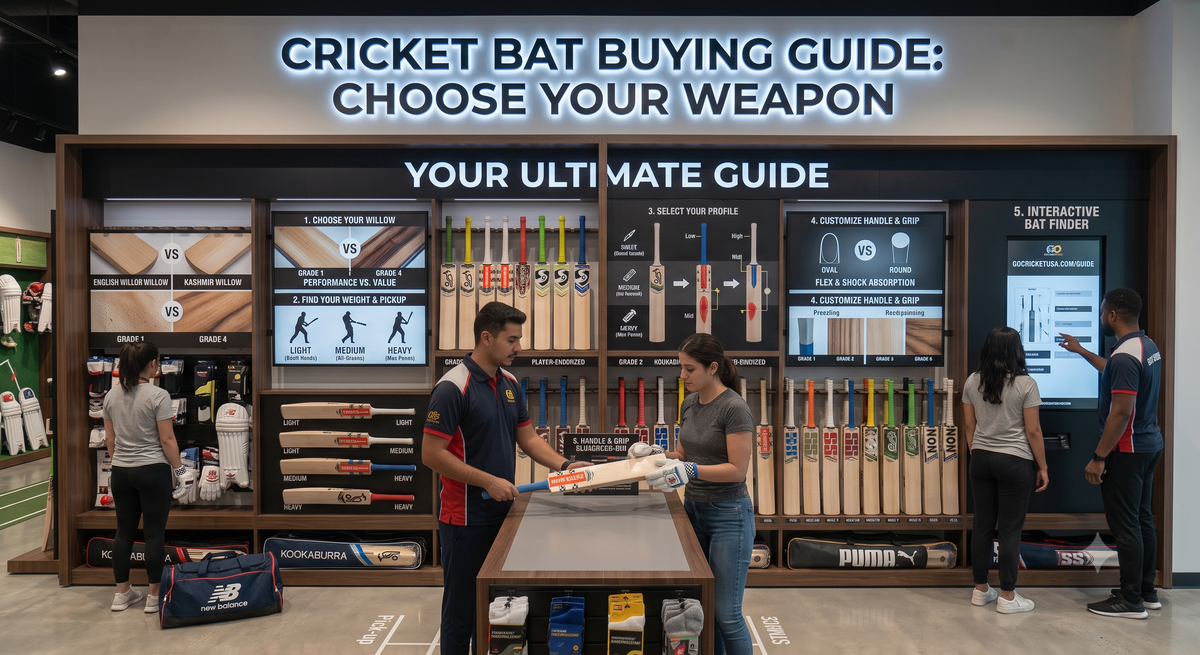
English Willow vs. Kashmir Willow
Almost every cricket bat is made from one of two types of willow.
English willow is grown primarily in the UK and is the gold standard for performance. It's lighter for its size, has a larger sweet spot, and rebounds the ball with noticeably more power. Nearly all bats used at club level and above, including every player-edition bat, are English willow. The tradeoff is price and a shorter break-in period tolerance — it needs proper knocking-in before use.
Kashmir willow is grown in India and Pakistan and is denser and heavier than English willow. It's more durable out of the box and costs significantly less, which makes it a solid choice for beginners, juniors still growing into the game, or anyone playing primarily tennis-ball or backyard cricket. Performance-wise it doesn't match English willow, but for casual and recreational play the difference matters less than the price gap.
Understanding Bat Grades
English willow bats are graded 1 through 6 (sometimes labeled Player's Grade, Reserve, or similar), based on the number and straightness of grains visible on the face, and how few blemishes the willow has.
- Grade 1: The finest willow — 8+ straight, even grains, minimal blemishes. Used in player-edition and pro-level bats.
- Grade 2-3: Very good willow with slightly more visual imperfections but comparable performance. Great value tier for serious club players.
- Grade 4-6: More affordable, with visible blemishes or uneven grains that don't significantly affect performance for most players. A good entry point into English willow.
Grade is a cosmetic and consistency rating, not strictly a performance guarantee — a well-pressed Grade 3 bat can outperform a poorly maintained Grade 1. But as a general buying signal, it's reliable.
Choosing the Right Weight
Heavier isn't better. A bat that's too heavy slows your bat speed, delays your shot selection, and increases injury risk over a long innings. Most adult bats fall in the 2lb 7oz to 2lb 10oz range (roughly 1100g–1220g), with lighter bats favored by players who rely on timing and quick hands, and heavier bats favored by power hitters with a longer backlift.
The best approach: pick up several bats of the same listed weight. Balance and pick-up (how light a bat feels when you lift it, regardless of its actual weight) vary between individual bats even at the same spec, because of where the wood mass sits along the blade.
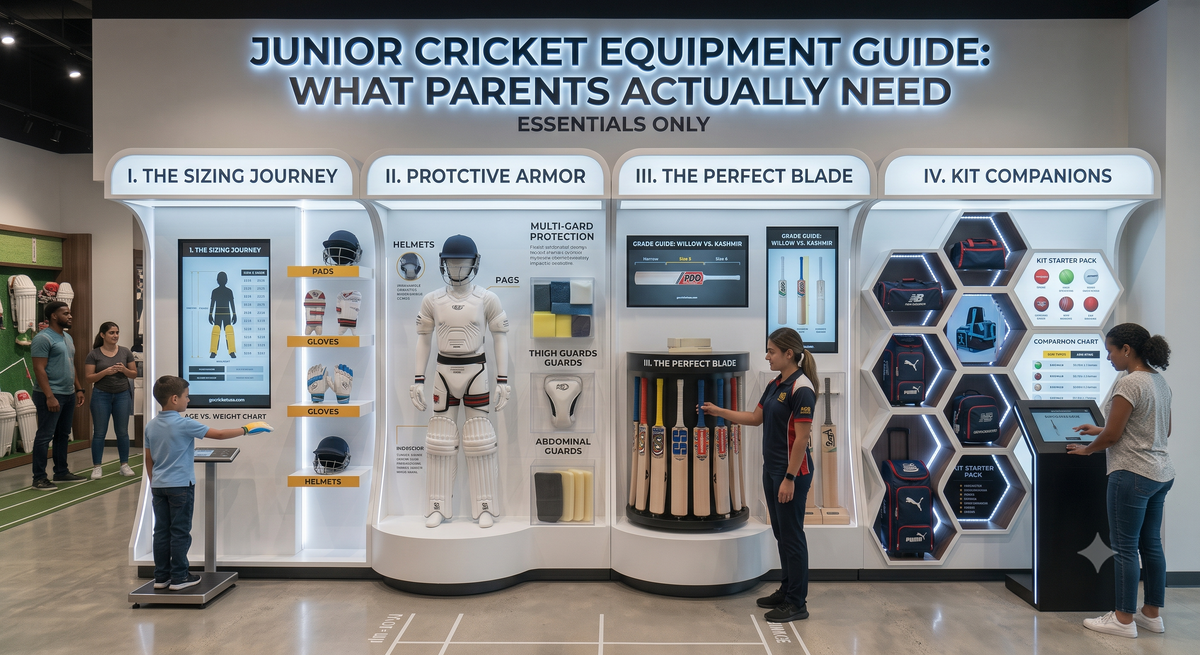
Bat Size Chart (by player height)
| Size | Player Height |
|---|---|
| Size 6 | 4'0" – 4'3" |
| Size 5 | 4'3" – 4'6" |
| Size 4 | 4'6" – 4'9" |
| Harrow | 4'9" – 5'2" |
| Short Handle (Adult) | 5'2" and above |
Blade Profile: Where the Sweet Spot Sits
Bats with a low sweet spot favor players who get onto the front foot and drive through the line — the power zone sits closer to the toe. Bats with a mid or high sweet spot suit players who play off the back foot or favor cross-batted shots, since the power zone sits higher up the blade. Most modern bats aim for a mid-to-low profile as a balance between the two styles.
How Much Should You Spend?
- Under $150: Kashmir willow or entry-grade (5-6) English willow. Good for beginners and juniors.
- $150–$350: Mid-grade English willow (Grade 2-4). The sweet spot for most club players — real performance without player-edition pricing.
- $350–$600: Premium Grade 1-2 willow, often with modern profile technology (bowed spines, concave backs, extended power zones).
- $600+: Player editions and signature bats, matching the exact specs used by professional players.
Before You Play: Knocking-In
Every new English willow bat needs to be knocked in before its first use — compressing the wood fibers so they can handle the impact of a hard ball without cracking. Skipping this step is the single most common reason new bats fail early. If you'd rather not spend the 4-6 hours doing it yourself, we offer a professional knocking-in service that handles oiling, pressing, hand knocking, and edge rounding for you.
Final Thoughts
There's no single "best" cricket bat — only the best bat for your size, budget, and playing style. If you're unsure, our team is happy to help you narrow it down: get in touch, or browse our full range of cricket bats by brand and grade.

Leave a comment
This site is protected by hCaptcha and the hCaptcha Privacy Policy and Terms of Service apply.