The Complete Cricket Helmet Buying Guide: Protecting Your Head Without Sacrificing Performance
Cricket balls travel fast, often well over 90 mph off a quick bowler's hand, and they're hard, small, and unpredictable off an uneven pitch. A good helmet isn't optional gear for anyone facing pace bowling, standing up at the stumps, or fielding close in. It's the single most important piece of protective equipment in your kit bag.
Why Cricket Helmets Matter
Cricket has seen its share of serious head injuries over the years, and those incidents reshaped how seriously the sport treats helmet safety. Today, helmets aren't just for batters. Wicketkeepers standing up to the stumps and fielders positioned close to the bat are also strongly encouraged to wear one.
Safety Certification Comes First
Before you look at color, brand, or price, check the certification label. The gold standard worldwide is the British Standard BS 7928:2013, updated in 2019 (BS 7928:2013+A1:2019) to add stricter testing for the faceguard and neck protection. This is the standard used by the ICC, ECB, and Cricket Australia.
A certified helmet has been tested for:
- Impact resistance
- Faceguard penetration resistance
- Retention strength
- Field of vision
Types of Cricket Helmets
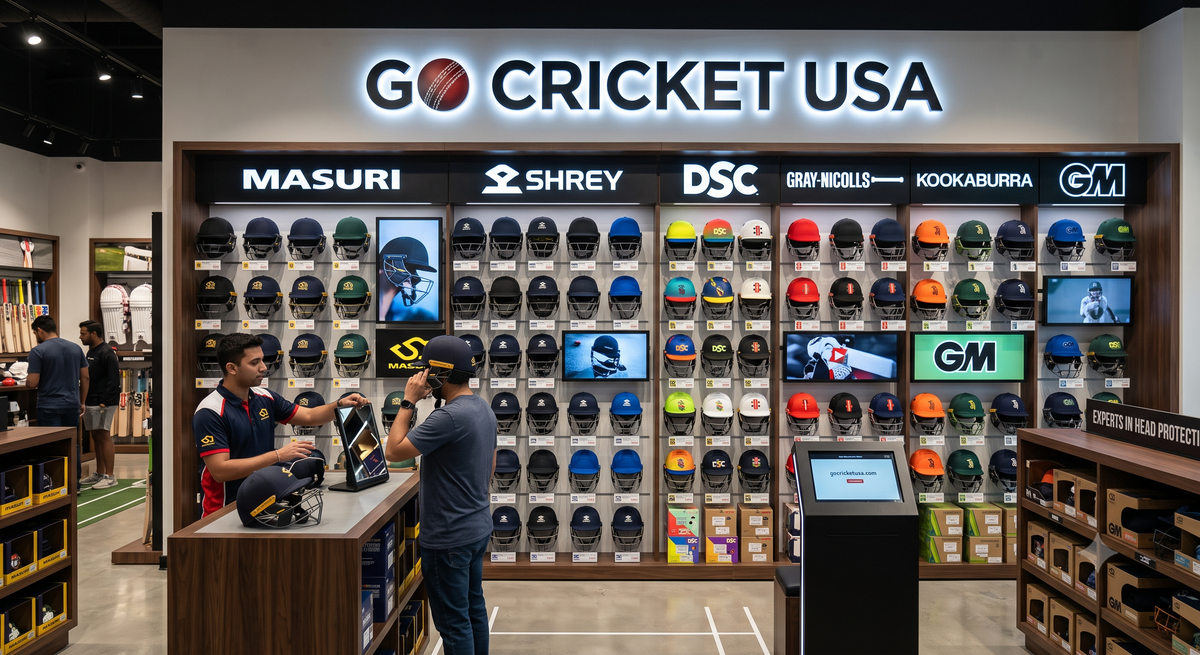
Traditional shell helmets with a titanium or steel grille offer a solid balance of protection, weight, and cost. Low-profile / aerodynamic helmets use a sleeker shell for reduced weight and better peripheral vision. Adjustable dial-system helmets let players fine-tune fit, especially useful for juniors.
Getting the Fit Right
- The helmet should sit level, covering the forehead
- Padding should sit snugly with no pressure points
- The grille should be close enough that a ball cannot wedge through
- The chin strap should be firm and secure
Do You Need a Neck Guard?
Increasingly, yes. Neck protectors are now recommended by governing bodies including Cricket Australia and the ECB alongside a certified helmet.
How Often Should You Replace Your Helmet?
- Replace every 3-5 years with normal use
- Replace immediately after any significant impact
- Inspect the grille regularly for rust or damage
Quick Buying Checklist
- BS 7928:2013 (or +A1:2019) certification label
- Correct size for your head circumference
- Grille material suited to your budget and climate
- Adjustable retention system
- Neck guard included or available as an accessory
- No visible cracks or damage if buying used
Final Thoughts
A cricket helmet is one purchase where cutting corners simply isn't worth it. Investing in a certified, well-fitted helmet is the difference between playing with confidence and playing with unnecessary risk.

Leave a comment
This site is protected by hCaptcha and the hCaptcha Privacy Policy and Terms of Service apply.